 Anthony
How I Build Google Ads Campaigns That Actually Convert
A Google Ads campaign converts when it is built backward from the sale. Set up conversion and call tracking first. Pick the campaign type that fits how your customers buy. Send each ad to a page that answers the exact search. Then answer the phone fast and judge everything by cost per booked job, not cost per click. Get those right and the newer AI features help you. Get them wrong and they spend your money faster.
I ran almost $1 million in PPC ad spend in two years as Director of Strategic Marketing at AdCom8. The tools have changed a lot since then. Google AdWords is now Google Ads, Universal Analytics is gone, and Google's AI now writes ads and picks searches for you. The fundamentals have not changed at all.
Key points
- Track calls and form fills before you spend a dollar.
- Search campaigns for people ready to buy. Performance Max when you have strong tracking and real creative.
- AI Max can widen your reach, but only feed it a site that converts.
- Every ad group gets a page that matches the search.
- Judge the campaign on booked jobs, not clicks.
What You'll Learn
Step One, Measure the Right Thing
The number one way to know a campaign works is that people buy from you. Everything else is a guess. So tracking comes first.
Use GA4 and Google Ads Conversions
Google's Universal Analytics stopped processing data on July 1, 2023 (Google Analytics Help). If someone still talks about "goals in Analytics" the old way, their setup is out of date. Today you track in Google Analytics 4 and in Google Ads conversion actions.
Track Calls, Not Just Clicks
For a local service business, most money comes by phone. Google Ads can count calls in two main ways.
- Calls from ads. Calls placed from call only ads or from call and location assets. Google uses forwarding numbers to report them, and you set a minimum call length so short hang ups do not count (Google Ads Help, calls from ads).
- Calls from your website. A snippet swaps your number for a Google forwarding number on your site, so you can see which keyword and ad led to the call (Google Ads Help, website calls).
Set a minimum call length that matches a real conversation in your business. A 10 second wrong number is not a lead.
Track the Job, Not Just the Lead
A lead is not a sale. The best campaigns I have run tied the call back to the booked job and the invoice. That is how you learn which keywords make money and which just make noise.
At Supercanic, the auto repair company I started with Alaina Limpert, we tracked 11,531 inbound calls in the 12 months to October 17, 2026, by our own call tracking count. Knowing where every call came from is the difference between guessing and knowing.
Step Two, Pick the Right Campaign Type
Google Ads has several campaign types. Pick the one that fits how your customers buy.
| Campaign type | Best for | Watch out for |
|---|---|---|
| Search | People typing what they need right now | Broad match without negatives can waste money |
| Search with AI Max | Reaching more searches beyond your keywords | Needs strong tracking and a site that converts |
| Performance Max | Running across all of Google from one campaign | Hard to see where money goes without good tracking |
| Local Services Ads | Local service businesses that want leads | Only some business types qualify |
Search Campaigns
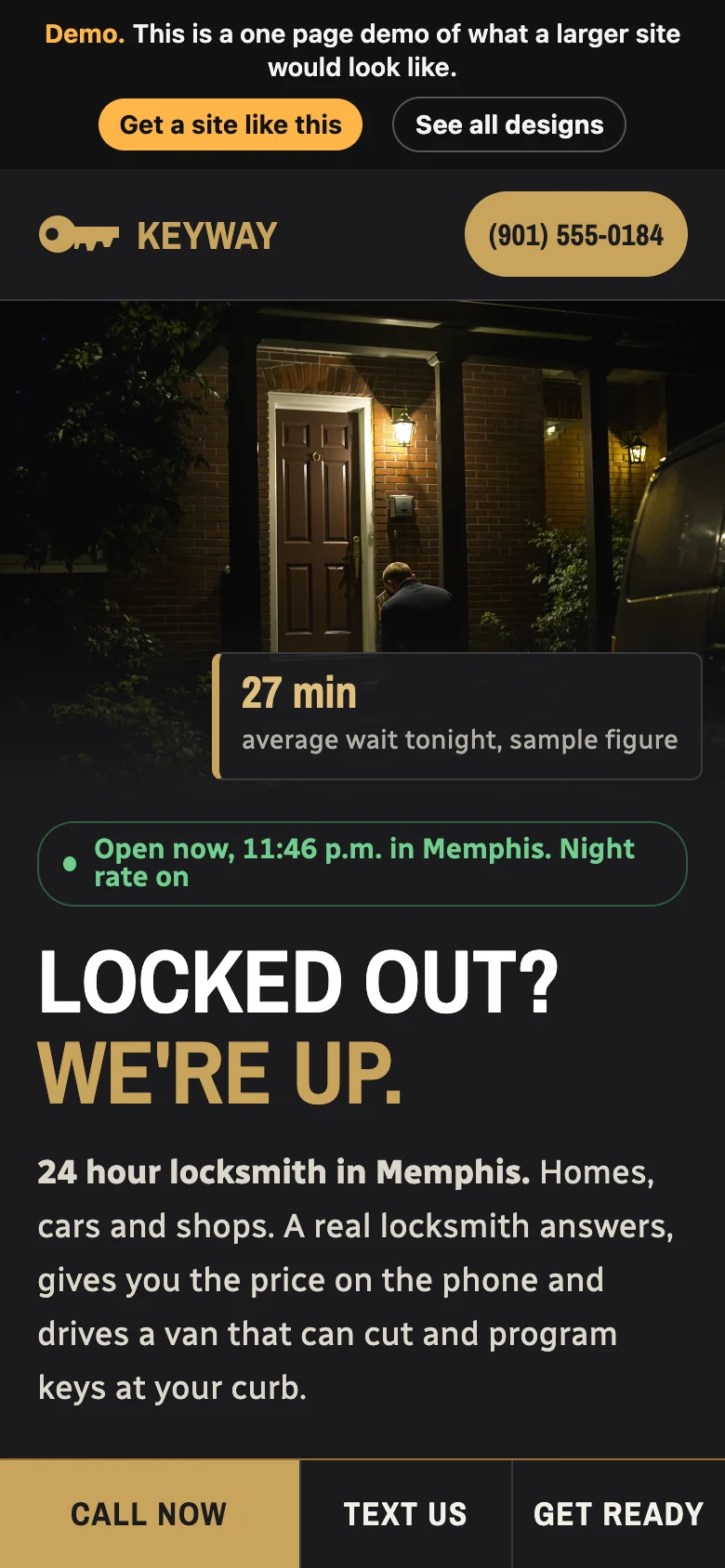
For most local businesses this is where I start. Someone types "emergency locksmith near me" and they want help now. Search catches that intent.
AI Max for Search Campaigns
Google introduced AI Max for Search campaigns on May 6, 2025 (Google Ads blog). It is a one click set of features. It widens your keywords with broad match and keywordless matching, writes headlines and descriptions from your landing pages and ads, and can send people to the most relevant page on your site.
Google's own internal data says advertisers who turn it on typically see 14% more conversions or conversion value at a similar cost per action (Google Ads blog, May 6, 2025). That is Google's number, not mine. My take is simple. AI Max reads your site to decide what to show. If your pages are thin or vague, it will match you to the wrong searches. Fix the pages first.
Performance Max
Performance Max runs ads from one campaign across YouTube, Display, Search, Discover, Gmail and Maps (Google Ads Help, Performance Max). You give it conversion goals, text, images, video and audience signals, and it decides where to spend.
It can work very well. It can also hide where the money went. I only use it when conversion tracking is solid and the business has real photos and video to feed it. Add brand exclusions and negative keywords where the campaign lets you.
Local Services Ads
Local Services Ads show at the top of some local searches. Google says you pay only for leads related to your business and the services you offer, not for clicks (Local Services Ads Help). Businesses that pass Google's screening can earn a Google Verified badge. Not every business type qualifies, so check your category first.
Step Three, Keywords and Negatives
Even with AI doing more of the matching, you still steer.
- Group keywords by service. Brake repair in one ad group, oil change in another. Each gets its own ads and its own page.
- Read the search terms report every week. It shows what people actually typed. You will find waste in the first week.
- Add negative keywords. "Free," "jobs," "salary," "DIY" and "how to" are common waste for service businesses. Your own list will be specific to your trade.
- Watch your service area. Target where you really work. A click from 80 miles away is money gone.
Step Four, Ads That Match the Search
Bigger ads still get more clicks. Use every asset Google gives you.
- Headlines that repeat the service and the city.
- Call assets so people can tap to call.
- Location assets if you have a storefront.
- Sitelinks to your main service pages.
- Real prices or "starting at" prices when you can share them.
Then make sure the page behind the ad says the same thing the ad says. If the ad promises same day brake repair, the page should open with same day brake repair, not your company history.
Step Five, The Landing Page Does the Selling
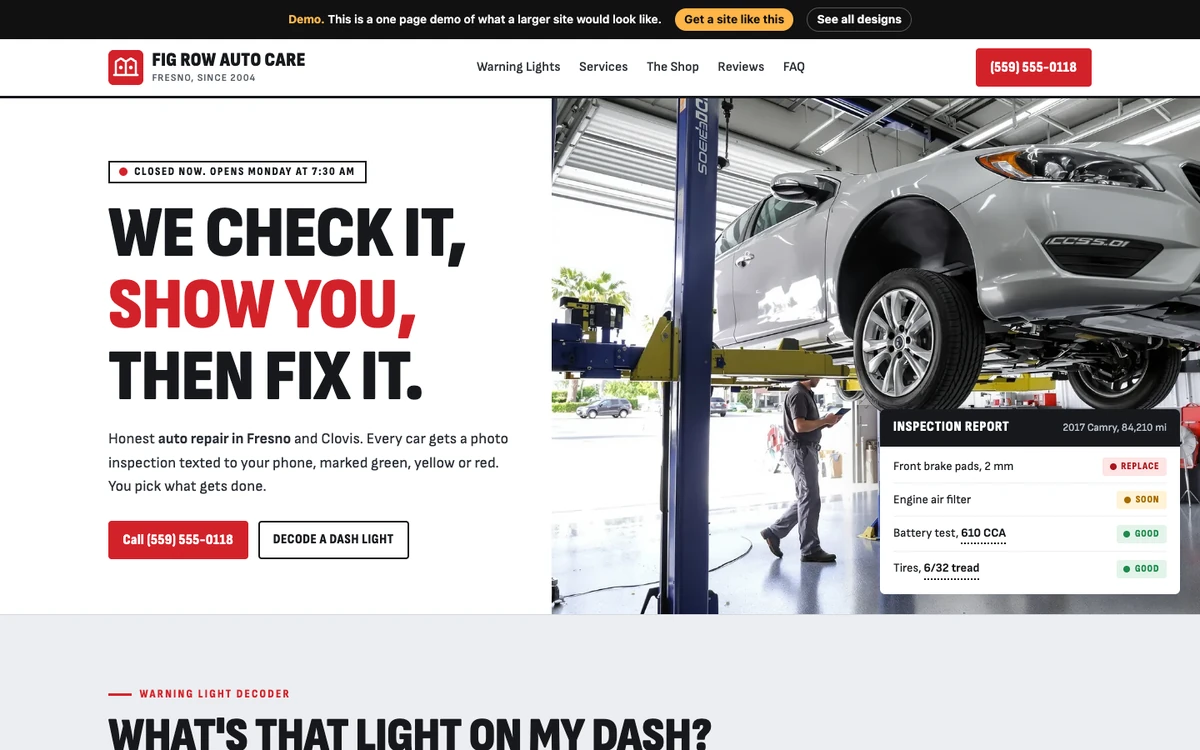
The ad gets the click. The page gets the call. I wrote a full post on this, landing page optimization tips, but this is the gist.
- Phone number at the top, tappable on mobile.
- One clear headline that matches the search.
- A real photo of your work.
- A short form that asks for a phone number.
- Reviews and proof near the top.
- Fast load on a phone.
Step Six, Answer the Phone
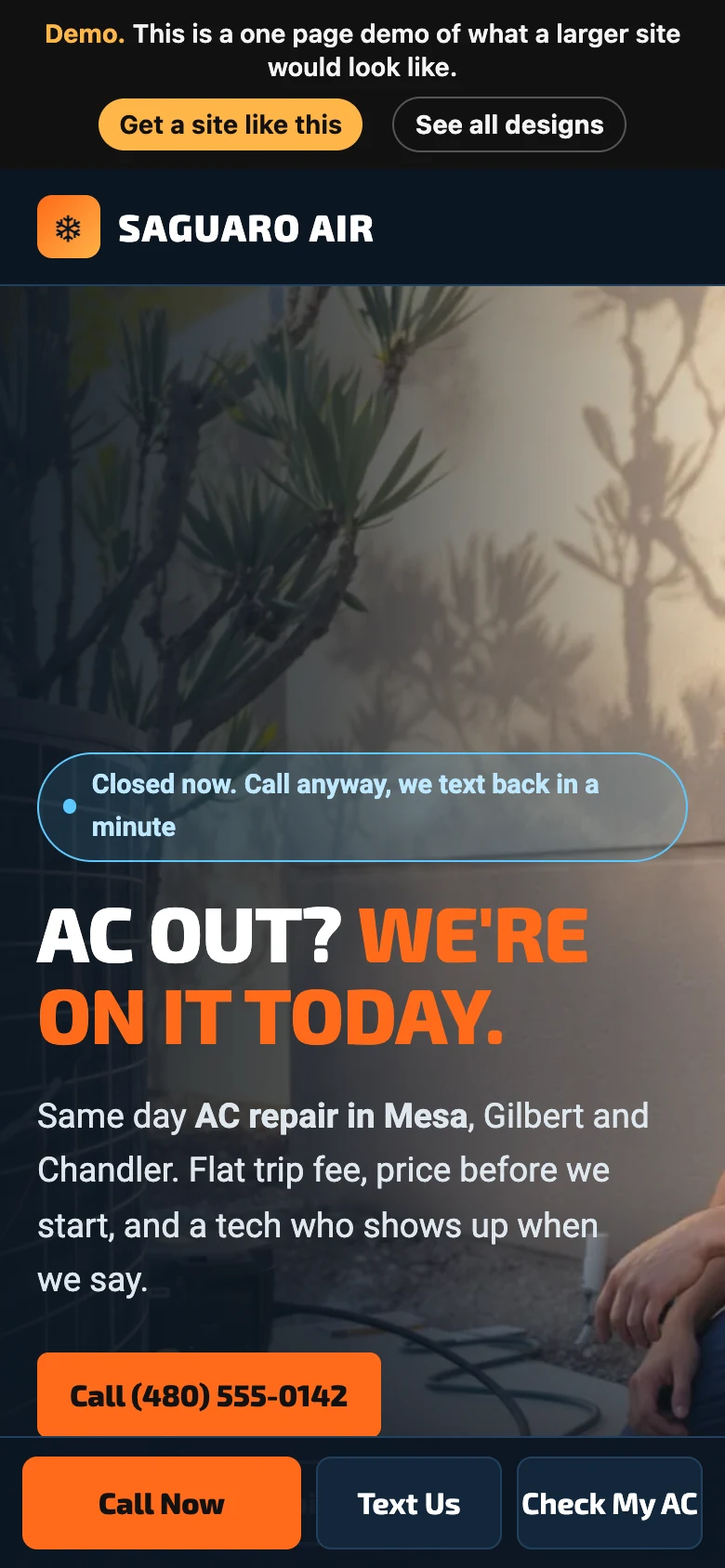
This is where most ad money dies. A business pays for a click, the customer calls, and nobody answers. That ad worked. The business did not.
- Answer live during business hours.
- Send a text back right away on any missed call.
- Get a quote out within the hour. My First Hour Rule guide covers how.
Step Seven, Do the Real Math
Take an example, not real client numbers, to show how I think about it.
| Line | Worked example |
|---|---|
| Monthly ad spend | $1,500 |
| Calls and form leads | 50 |
| Cost per lead | $30 |
| Leads that book | 20 |
| Cost per booked job | $75 |
| Average job value | $400 |
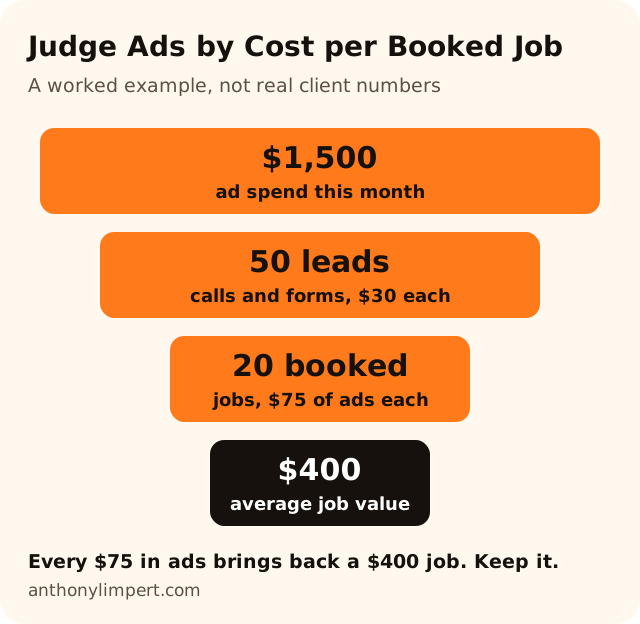
In that example, every $75 in ads brings in a $400 job. That campaign is worth keeping. If your cost per booked job is higher than what a job earns you, fix the tracking, the page or the phone before you raise the budget.
Show whoever runs your ads these numbers every month, unfiltered. When the person spending the money can see what comes back, they get better at spending it.
When Ads Are Not the Answer
Ads stop the moment you stop paying. These days I put most of my own budget into organic search and Google Business Profiles, because those keep working. MechanicRank, the mechanic directory I built, went from 53 Google clicks in May 2026 to 4,179 in the first 14 days of October 2026, per our own Google Search Console data, with no ads at all.
Ads are great for testing what sells and for filling a gap fast. The foundation should be a site and a map listing that bring in calls on their own. My Google Business Profile playbook is where I would start.
Want my new posts near the top when you search? Pick Anthony Limpert as a preferred source on Google and Google shows them to you more often in Top Stories.
Ask the Shop
How do I know if my Google Ads campaign is working?
Track calls and form fills as conversions, then tie them to booked jobs. If your cost per booked job is less than what a job earns you, it is working. Clicks alone tell you nothing.
Should I use Performance Max or Search campaigns?
Most local businesses should start with Search, because it catches people ready to buy. Add Performance Max once your conversion tracking is solid and you have real photos and video to feed it.
What is AI Max for Search campaigns?
AI Max is a one click feature set Google introduced in May 2025. It widens keyword matching, writes ad text from your site and can pick the best landing page. It works best when your site already converts.
How does Google Ads track phone calls?
Google Ads counts calls from call assets and call only ads using forwarding numbers. It can also track calls from your website by swapping in a forwarding number. You set a minimum call length to count as a conversion.
What are Local Services Ads?
Local Services Ads show at the top of some local searches. Google says you pay only for leads related to your business and services, not for clicks. Not every business type qualifies.
Is AdWords the same as Google Ads?
Yes. Google renamed AdWords to Google Ads years ago. If a guide still says AdWords, check the rest of its advice is current too.
Your Checklist This Week
- Confirm your conversion actions in Google Ads count real calls and form fills
- Set a minimum call length that matches a real conversation
- Read the last 30 days of your search terms report and add negative keywords
- Check that every ad group sends people to a page that matches the search
- Make sure the phone number is tappable at the top of every landing page
- Work out your cost per booked job, not just cost per click
- Set up a text back on every missed call
Want a second set of eyes on your ad account or your landing pages? Book a strategy call.