 Anthony
 Speed To Lead: Why The First Five Minutes Decide The Job
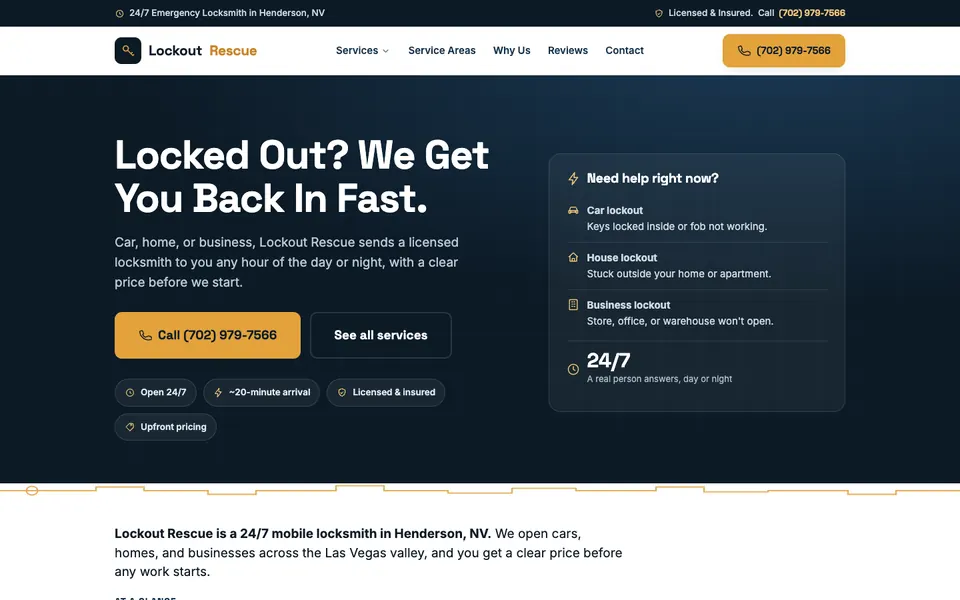
The first five minutes decide the job because the customer is still holding their phone and still has the problem. If you answer then, you get the call. If you answer an hour later, they have already talked to someone else. Speed to lead is simply how long it takes you to respond to a new inquiry, and for most local businesses it is the cheapest win left.
We run phones and forms for our own mobile mechanic company and we audit a lot of small business sites. The pattern is always the same. The owner spends money to get the phone to ring, then misses the call while under a car, on a roof or with a client. The marketing worked. The follow up did not.
Key points
- A lead is a person with a problem right now. Every minute you wait, the odds shift to whoever answers first.
- A 2011 Harvard Business Review study found firms that contacted a lead within an hour were about seven times more likely to qualify it than firms that waited longer.
- The same study found the average company took 42 hours to respond. You beat most of your competitors by being fast, not by being clever.
- You do not have to answer every call in person. An instant text back counts.
- The fix is a setup, not willpower: missed call text back, form alerts to your phone, and a named backup person.
Why Speed Wins More Than Price
Think about how a customer shops for a locksmith, a plumber or a roofer. They search, tap two or three results and contact all of them. Whoever responds first becomes the default. The rest have to talk the customer out of someone who already seems helpful.
Price matters later. Speed matters first. A customer who has not heard back from you has no idea what you charge, how good you are or whether you exist. You lose before the price conversation starts.
That is the source of the Harvard Business Review finding. In the article "The Short Life of Online Sales Leads," researchers found that responding within an hour made a lead around seven times more likely to turn into a real conversation, compared with waiting even a bit longer. The sample was business to business software leads, so do not treat the exact multiple as gospel for roofing. The direction is the part to trust. It matches what we see on phones every day.
The Real Reasons You Respond Slowly
Nobody ignores leads on purpose. Here is what actually happens, worst problem first.
1. The Owner Is The Only Phone
If one person does the work and answers the phone, the phone loses every time. The fix is not to work faster. The fix is to put a second layer in front of the phone, which I cover below.
2. Form Leads Go To A Dead Inbox
We see this on audits all the time. The contact form sends to an old email address nobody checks, or to a spam folder, or to a person who left the company. The form says "thanks, we will be in touch" and nobody ever is. Submit your own form this week and see how long it takes to reach you.
3. Alerts Are Quiet
An email in a crowded inbox is not an alert. A text to your phone is. If a new lead does not make your phone buzz, you will find it hours later.
4. Nobody Owns It
When "the team" is responsible for new leads, nobody is. Name one person for each shift. Name a backup. Write it down.
5. After Hours Is A Black Hole
A big share of local searches happen in the evening and on weekends, when the office is closed. If your system only works nine to five, you hand those jobs away.
The Five Minute Setup
You can build this in an afternoon. None of it needs a big budget.
- Missed call text back. If you miss a call, an automatic text goes out within a minute. Something like: "Sorry we missed you. This is Mike's Plumbing. What do you need help with?" It keeps the customer from dialing the next name on the list.
- Instant form reply. When someone fills out your form, they get a text or email right away that confirms you got it and says when you will call.
- Alerts that buzz. Form leads, missed calls and text replies all hit your phone as a text or push notification.
- A backup. Choose someone to answer if you do not respond in ten minutes. It can be a spouse, an office manager or a call answering service.
- A rule for after hours. Decide what happens at 9 p.m. A text back that promises a call at 7 a.m. beats silence.
Most customer systems sold to local businesses can do steps one through three. If yours cannot, switch.
What To Say In The First Message
The first message has one job: keep the conversation alive. It is not a sales pitch.
- Say who you are. A text from an unknown number gets ignored.
- Ask one easy question about the problem.
- Do not send a wall of text or a price list.
- Sound like a person. "Hey Maria, this is Alex with Ontario Roofing. Is the leak active right now?" works. A paragraph of marketing copy does not.
Never use text blasts to people who did not ask to hear from you. Reply to people who contacted you. That is permission, and it is the line that keeps you out of trouble with carriers and the law.
What Fast Looks Like In Numbers
| Response time | What usually happens |
|---|---|
| Under 1 minute (auto text) | Customer feels heard, stays put |
| 1 to 5 minutes (a person) | Best odds to book the job |
| 5 to 60 minutes | Customer is still shopping, you are competing |
| Same day | Many have already hired someone |
| Next day or later | You are chasing, not winning |
These are working rules from watching phones, not a lab result. Treat the shape of the table as the point. Odds drop fast, and the steepest drop is in the first few minutes.
Do Not Wreck It With A Slow Website
Speed to lead starts before the lead exists. If your page takes six seconds to load on a phone, the customer leaves before they ever call. Google's own research with SOASTA reported that over half of mobile visits are abandoned when a page takes longer than three seconds to load. Put the phone number at the top, make it tappable, and keep the form short: name, phone, what you need. Every extra field costs you leads. If you want help auditing that, book a strategy call.
How To Test Yourself This Week
You do not need software to find your problem. Do this:
- Call your own business number from a phone that is not yours and let it ring out. What happens?
- Fill out your contact form on your phone. Time how long until you get a reply.
- Text your business line at 8 p.m. Does anyone answer?
- Check your Google Business Profile and look at the missed calls from the last week. Count how many you never returned.
Write the times down. If any of them is over an hour, that is where your next job is leaking out. Pair this with a stronger website too. A page built to convert, like the ones in my designs, gives your fast response something to catch.
Questions
What is speed to lead?
It is the time between a customer reaching out and your first response. It covers calls, texts, forms and chat messages. The shorter it is, the more of those inquiries become booked work.
Is an automatic text really a response?
Yes, as a first touch. It tells the customer you are alive and gives you time to call back. It does not replace a real reply, but it stops them from moving on in the meantime.
What if I cannot answer during a job?
Use a missed call text back and a backup person. If neither is possible, answer in blocks: check your phone at set times, such as every 30 minutes, and call back fast.
Does this apply to non emergency businesses?
It does. Emergency trades feel it most, but a wedding photographer or a medspa also loses people who hear back from a competitor first. Faster is better everywhere, just with a longer window.
Want my new posts near the top when you search? Pick Anthony Limpert as a preferred source on Google and Google shows them to you more often in Top Stories.