 Anthony
 Mobile Mechanic Vs Repair Shop: Which One Should You Call
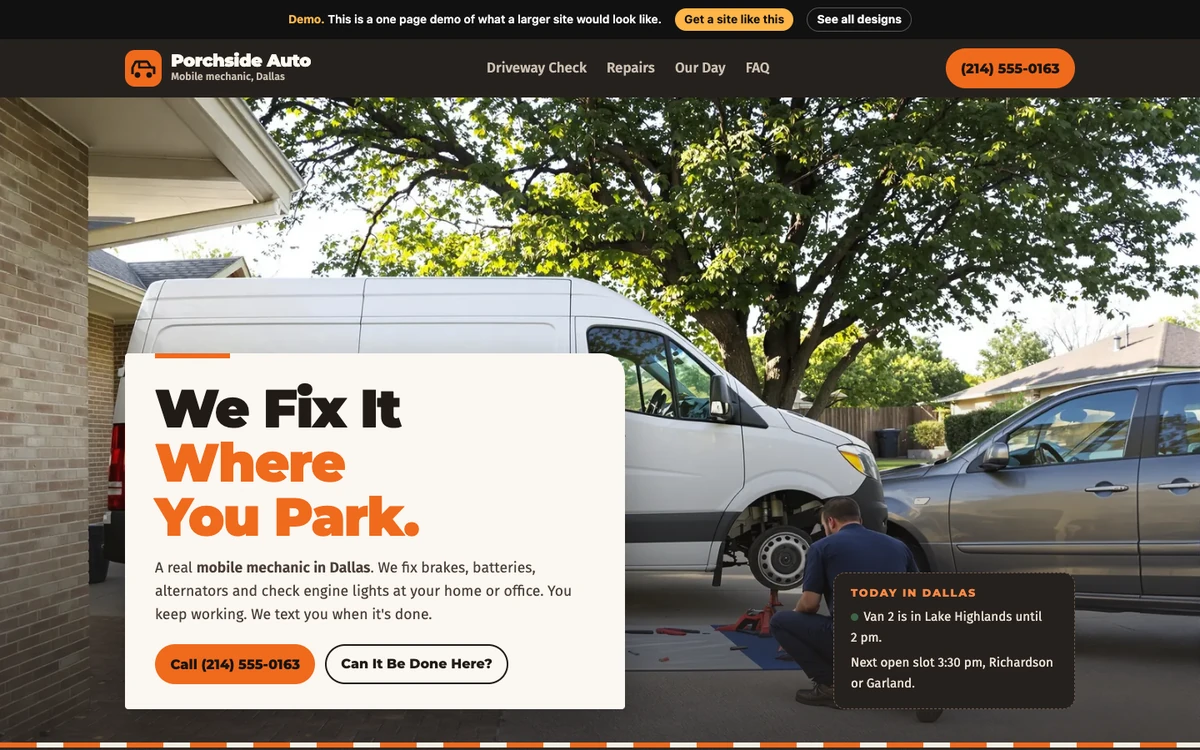
Call a mobile mechanic when the car still needs a diagnosis, a battery, brakes, a starter, an alternator or routine maintenance and you would rather not give up your day. Call a repair shop when the job needs a lift, heavy equipment or a licensed test, like major engine or transmission work, alignments or a smog check. Many repairs can go either way, so the real question is what your car needs and how fast you need it.
I co-founded Supercanic, a mobile mechanic and auto repair company in Riverside County, California. We run both kinds of work, so I do not have a reason to oversell either one. We are an ASE Certified Business with ASE certified mechanics, and we send customers to a shop when a shop is the right place. This post is how I would decide if I were you.
Key points
- Mobile is best for no start, battery, starter, alternator, brakes, belts, fluids and many diagnostics.
- A shop is best for jobs that need a lift or big equipment: alignments, engine or transmission removal, heavy suspension work, tire mounting and balancing, and state mandated tests like a California smog check.
- Mobile saves you time and a ride. A shop gives you a bay and a full set of tools.
- Price depends on the job and the area, not on the van. Get a written quote either way.
- Certification and reviews matter more than the shop sign. Ask about ASE credentials, warranty and who does the work.
- A mobile mechanic should tell you when your job needs a shop. That is a sign of honesty, not weakness.
The Short Version
| Your situation | Better fit | Why |
|---|---|---|
| Car will not start | Mobile | You cannot drive it, and many causes are fixable on site |
| Dead battery | Mobile | Test and replace at your location |
| Brake pads and rotors | Either, often mobile | Common driveway job with the right tools |
| Check engine light | Either | Scan first, then decide |
| Alternator or starter | Mobile in most cases | Usually accessible without a lift |
| Strange noise, not sure what | Mobile for a first look | Cheap way to find out if it needs a shop |
| Oil change or routine service | Either | Convenience vs a full shop setup |
| Alignment | Shop | Needs an alignment rack |
| Engine or transmission replacement | Shop | Needs a lift and heavy equipment |
| Tire mounting and balancing | Shop, or a mobile tire service | Needs a machine |
| Smog check in California | Licensed station | Required test, done at a licensed station |
| Pre purchase inspection | Mobile or shop | Mobile can inspect at the seller's location |
| Safety recall work | Dealer | The manufacturer handles it |
That table will not cover every car. Treat it as a starting point and ask the person you call.
What A Mobile Mechanic Does Well
The strength of mobile is not only convenience. It is the time you get back and the stress you avoid.
- Nothing to tow in many cases. If the car will not start, you do not pay to move it and wait for a bay.
- You can watch. Standing in the driveway while someone explains what failed is a different experience than a phone call from a counter.
- Fewer trips. No dropping off, no ride, no pickup.
- Good for simple, common repairs. Batteries, brakes, belts, hoses, starters, alternators, sensors, fluids.
- Good for inspections. A mobile mechanic can meet you at the seller's house for a used car check.
I will be straight about the limits. A van carries tools and parts, not a full shop. Rain, extreme heat, a steep driveway or a tight parking garage can make some jobs unsafe or impractical. A good mobile mechanic will say so and move the job.
What A Repair Shop Does Well
A shop has something a van never will: infrastructure.
- Lifts and racks. Many jobs are easier and safer with a car in the air.
- Heavy equipment. Engine hoists, transmission jacks, presses, alignment and tire machines.
- A controlled space. Weather does not matter and a car can sit for several days.
- Specialty tools. Some work needs a particular scan tool, press or machine.
- Licensed tests. Where the state requires it, such as California's smog checks.
- More hands. A shop can have several people on one car.
If your car needs a transmission rebuild, a head gasket or frame work, you want a shop. If you are not sure, start with a diagnosis.
What About Cost
I will not give you a number, because it depends on the job, the car, the part and where you live. What I can say is how the pieces work.
- Labor rates: both mobile and shop labor are priced by region and by skill. A mobile mechanic may not have a big building to pay for, but has a van, fuel, insurance and drive time. A shop has rent, equipment and staff. Neither is automatically cheaper.
- Parts: the same part costs the same, and the quality matters more than where it was installed. Ask what brand and what warranty.
- Diagnostic fees: many mobile mechanics and shops charge for diagnosis and may credit it toward the repair. Ask first.
- Trip fees: some mobile services charge a call out fee. Ask whether it is included in the quote.
Ask for a quote in writing, by text or email, with parts and labor listed separately. If someone will not put a price in writing, call someone else. At Supercanic our quotes are texted so a customer has the price in hand before anyone starts, which is one reason we built Shop Desk to text quotes and invoices.
Questions To Ask Before You Book
Do not skip these. They separate real professionals from risky ones.
- Are your mechanics ASE certified? ASE, the National Institute for Automotive Service Excellence, tests and certifies technicians. Certification is not everything, but it is a useful sign. Ask which certifications the person who will work on your car holds.
- Are you insured? A working mechanic should carry liability insurance.
- What is the warranty on parts and labor? Get it in writing.
- Can you give me a written quote before you start?
- What happens if you find something else? A good answer is "we call you and get your okay before doing anything extra."
- Do you have reviews I can read? Read the bad ones and see how the business replied.
- Will you tell me if this needs a shop? An honest yes is a good sign.
- How soon can you come, or fit me in?
At Supercanic, our five locations list hundreds of customer reviews, and I encourage you to read ours and any competitor's before you decide. Reviews are not perfect, but patterns show up quickly.
Red Flags With Either Option
- A quote that is only a verbal number.
- Pressure to approve work immediately.
- Cash only with no receipt.
- No business name, license or insurance when asked.
- Vague answers about parts.
- A "diagnosis" that changes every time you ask.
- A price that is far lower than everyone else, with no explanation.
A mobile mechanic with no business address is not automatically bad, since many are small independent operators. But you should be able to find a name, a phone number, a record of work and reviews. Be wary of someone who just shows up in a parking lot with a card.
How To Choose When You Cannot Decide
Use this simple order of questions.
- Can the car be driven safely? If no, mobile is usually easier than a tow.
- Does the job need a lift, a rack or a special test? If yes, a shop.
- Is it simple and common? If yes, mobile is often a good fit.
- Do you have time to wait at a shop? If not, mobile saves your day.
- Is it a big, expensive repair? Get a second opinion, from either kind of provider, before you spend.
If you are still stuck, text a photo and a short description to a mobile mechanic and ask. A good one will tell you honestly which way to go.
For Shop And Mobile Owners Reading This
If you run either type of business, the lesson is the same: the customer wants a clear price, a fast answer and someone honest. If your Google profile, site and quote process do that, you win the call. I wrote more about the quote side in text quotes win repair jobs and about building trust on your site in landing page optimization tips.
If you are a customer looking for someone near you, MechanicRank lists mobile mechanics and shops with a phone number for each, so you can compare and call. If you run a shop and want help with your marketing, book a strategy call.
Questions
Is a mobile mechanic cheaper than a repair shop?
Not always. Both price labor by area and skill. A mobile mechanic has no big building, but has a van and travel time. Compare written quotes for the same job, with parts and labor listed.
Can a mobile mechanic do everything a shop can?
No. Jobs that need a lift, an alignment rack, tire machines, heavy equipment or a licensed state test usually need a shop. A good mobile mechanic will tell you when your job is one of those.
Are mobile mechanics certified?
Some are, and some are not. Ask whether the person working on your car holds ASE certifications and whether the business carries insurance. At Supercanic our mechanics are ASE certified and we are an ASE Certified Business.
What should I do if my car will not start?
If it is safe to do so, check the battery and the obvious things, then call a mobile mechanic. Many no start problems, like a dead battery, a starter or an alternator, can be found and fixed on the spot. If it turns out to need major work, you can then choose a shop with the diagnosis in hand.
Want my new posts near the top when you search? Pick Anthony Limpert as a preferred source on Google and Google shows them to you more often in Top Stories.