 Anthony
 Building A Directory Site As A Lead Asset
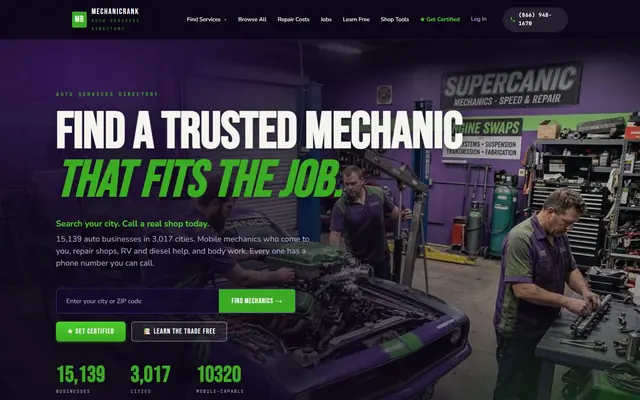
A directory site becomes a lead asset when it ranks for the searches your customers type, shows real information that helps them choose, and gives you a way to turn visits into calls, claims or sales. It is slow to build and easy to build badly. The version that works is narrow, accurate and useful. The version that fails is thousands of near empty pages.
I run MechanicRank, a directory of mechanics and auto repair shops, and I have built other niche directories. I also audit a lot of directories other people built. Most of them fail for the same reason: they were built to look big, not to help anyone choose.
Key points
- Pick one trade and one job to be done. "Everything in every city" does not win.
- Real data is the asset. Names, phones, hours, services, service areas, and a way to keep them current.
- Each page needs a reason to exist. A page with just a name and address is thin.
- Money comes from leads, claimed listings, referrals or sponsors. Decide before you build.
- Do not fake reviews, fake counts or scraped text. Trust is the whole product.
- Expect months before search traffic grows. Plan for that.
Why A Directory Can Be Worth It
A local service business has one website and fights for its own name. A directory has hundreds or thousands of entry points: each trade, each city, each service. People search "mobile mechanic near me" or "brake repair in Hemet," and a well built directory page can match those searches in a way a single company site cannot.
It can also be a lead asset in a few ways.
| Revenue path | How it works | Watch out for |
|---|---|---|
| Lead referrals | Visitor calls or requests a quote, you route it to a business | Routing rules, response speed, honest disclosure |
| Claimed or upgraded listings | Businesses claim a profile and pay for extras | Do not hide basic info behind a paywall |
| Sponsored placements | Businesses pay for visibility | Label them clearly as sponsored |
| Your own business | The directory feeds leads to your own company | Be upfront if you are listed in it |
| Tools and software | Directory visitors become customers of your product | Keep it separate from listing integrity |
Choose the path before you build. It changes the data you collect and the pages you create.
Step 1. Pick A Narrow Lane
The best directories I have seen do one thing well.
Questions to answer first:
- Who searches? Customers, or businesses looking for a supplier?
- What do they need? A phone number, a price range, proof of a license, hours, a service area?
- Why would they use you instead of Google Maps? You need an answer. Maybe you cover mobile mechanics that do not have a storefront, or add certifications, or show verified licenses.
- Can you win here? Check who ranks. If the first page is full of giant platforms and you add nothing new, pick a smaller lane.
Our trade, auto repair, has plenty of listings. What it lacked, in our view, was a place that distinguished mobile mechanics from shops and showed whether a shop is certified. That gap is a reason to exist. Yours has to be as specific.
Step 2. Get Real Data, And Plan To Keep It Fresh
Data is what you are building. A pretty site over bad data is a liability.
Sources to consider:
- Public records and license databases for your trade.
- Public business listings, used within each source's terms of use.
- Businesses claiming and editing their own profiles.
- Your own first hand knowledge and verification.
Do not copy someone else's reviews or descriptions. Do not scrape text and publish it as yours. Check the terms of every source and the law in your area.
Then plan for decay. Businesses move, close and change numbers. A directory with dead phone numbers teaches visitors not to trust it. Build ways to find that out: a "report a problem" link, a periodic check, and a way to mark a listing closed.
Step 3. Design Pages That Deserve To Exist
This is where most directories die. Google can crawl a million pages and index very few. A page that only repeats a name, an address and a map pin adds nothing, and many of those pages get ignored or dragged down together.
What a useful listing page can include:
- The business name, phone, address, hours, service area.
- Services it offers, and what it does not.
- Credentials you have actually verified.
- Photos, when you have real ones.
- Real reviews, with the source stated.
- Nearby alternatives, so a visitor can compare.
- Questions people ask, answered. See FAQ pages that Google and AI actually use.
For city and trade pages, add something no one else has: price ranges from real data, local rules, how many providers are in the area, how to choose, what to ask. If you cannot add anything real for a city, do not publish a page for it yet.
I covered the same trap from the business side in local SEO for businesses with more than one location. A hundred near identical city pages is what Google's spam policies call doorway pages.
Step 4. Structure It So People And Search Engines Find Things
Plan the site map before you publish.
- Home: search by city or ZIP, plus a clear promise.
- Trade or category pages: one for each job type.
- City or area pages: only where you have real listings and real content.
- Listing pages: one per business.
- Guides and answers: pages that explain how to choose, what things cost, what to watch for.
- Claim and add pages: for businesses to join.
Keep it shallow. A listing should be reachable in three clicks from the home page. Link up and down: listing to city, city to category, category to home.
Use structured data that matches what is on the page, like LocalBusiness details. Do not mark up reviews you do not have.
Step 5. Make Money Without Wrecking Trust
Be clear and honest about how you earn.
- Label sponsored listings.
- If you are listed in your own directory, say so.
- Never pay to remove honest reviews, and never sell fake ones.
- Do not rank by who pays unless it is clearly labeled.
- Disclose how leads are routed.
The FTC's rule on fake reviews and testimonials took effect in October 2024. A directory built on fabricated ratings is both unethical and a legal risk.
Free listings with simple tools to claim and update, then paid extras that actually help, is a model that tends to hold up. We built MechanicRank around the idea that every listing has a real phone number a customer can call, and we add certifications where we can verify them. You can look at it at mechanicrank.com.
Step 6. Get Found And Get Linked
A directory needs a few things to take off.
- Index it. Submit your sitemap in Search Console, ping IndexNow, and link from page to page. See my post on getting new pages indexed fast.
- Give businesses a reason to link back. A badge, a profile page they can share, a "find us on" link.
- Earn links with useful data. A study of local prices or a guide that people cite.
- Promote in the trade. Associations, forums, local groups and suppliers.
Do not buy a pile of links. Do not trade links in rings. They put the whole site at risk.
What It Costs In Time
Be realistic. A directory is not a weekend project.
- Planning the lane and data: weeks.
- Collecting and cleaning data: weeks to months.
- Building templates and pages: weeks.
- Indexing and ranking: months.
- Keeping it fresh: forever.
If you cannot commit to maintenance, build something smaller, such as a good "best of" guide for one city and one trade. It teaches you the same lessons at a smaller scale.
A Quick Test Before You Start
Answer yes or no.
- Do I know exactly who the searcher is and what they need?
- Can I get accurate data on at least a few hundred listings?
- Do I have something to add that Google Maps does not?
- Do I know how it makes money?
- Can I keep it updated?
- Would I send my own mother to it?
If you have five yeses, build it. If not, fix the weak spot first. If you want a second opinion, book a strategy call or see what I built on the work page.
Questions
How much does it cost to build a directory site?
It depends on the data and the build. The site itself can be fairly cheap. The expensive parts are collecting accurate data, keeping it fresh and the time it takes to rank. Plan for months of work before traffic appears.
Can a directory rank on Google?
Yes, when it has useful, unique pages and real data. Directories that publish thousands of thin pages with only a name and address rarely do well, and can drag down the whole site.
Where should the listing data come from?
From public records, licensing databases and sources whose terms allow it, from businesses that claim and edit their profiles, and from your own verification. Do not copy reviews or descriptions from other sites.
How do I make money from a directory?
Common routes are lead referrals, paid claimed listings, clearly labeled sponsored placements, or using it to feed your own business. Pick one before you build and be open with visitors about how you earn.